Virtual MICE Platform
Virtual Seoul 2.0
TIMELINE
May–Nov 2021
CLIENT
Seoul Tourism Organization
ROLE
Service Planner & UI Developer
SKILLS
Service & UX Planning
Event Operations
Stakeholder Coordination
Planning a virtual event platform built around Seoul’s landmarks.
Virtual Seoul 2.0 is a virtual MICE platform developed with the Seoul Tourism Organization to support international conferences, exhibitions, networking, and business events.I worked across service planning, UX, multilingual content, QA, and event operations, translating event requirements into platform flows and coordinating updates across internal teams and external stakeholders.
How can one platform adapt to different global events?
Each event required different schedules, content, languages, participant flows, and operational updates while using the same underlying platform.The experience also needed to connect virtual venues, conference programs, exhibitions, networking, and business meetings without making navigation overly complex.
Structured the platform around reusable event experiences
I helped define service flows and content structures for virtual venues, conference spaces, exhibitions, and networking features, then coordinated event-specific content, schedules, QA, and updates for each program.
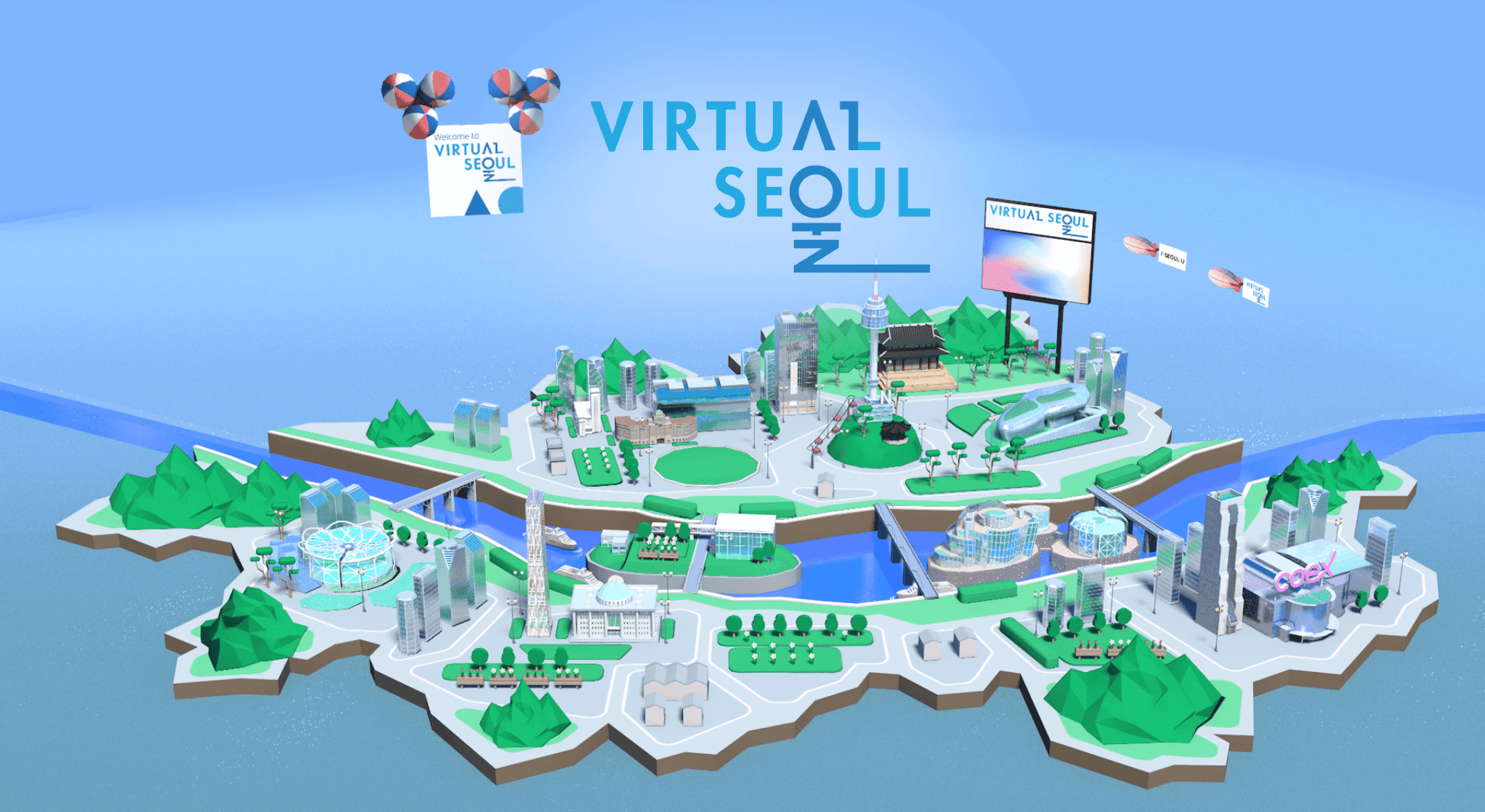
Virtual Seoul Experience
The platform recreated Seoul landmarks as virtual venues where participants could move between conferences, exhibitions, networking spaces, and event programs.

Event Operations
Event-specific programs, multilingual content, schedules, and participant journeys were configured and reviewed for each international event.

2K participants · 92 countries
Supported the 66th International Pharmaceutical Students’ Federation World Congress through the platform.
Business matching across 8 countries
Supported 1:1 business consultations during the 2021 Virtual MICE Show.
International recognition
Virtual Seoul was later recognized as an international tourism innovation case.
What I learned?
Translate different needs into one experience
Organizers, designers, developers, and international participants approached the platform with different requirements.
I learned to turn those requirements into clear flows, content structures, and operational tasks while keeping the overall experience consistent.
Plan for operations, not just launch
Live events required frequent content, schedule, and program updates even after the core platform was built.
This showed me the importance of designing structures that make ongoing event operations predictable and manageable.